The Dr. Norman L. Lee Museum
655 Holly St., Junction City, Oregon
MUSEUM HOURS
First & Third Saturday: 1pm-4pm
and the Second & Fourth Thursday: 1pm-4pm

The Dr. Norman L. Lee Museum as we see it today was built in 1872, and was the home of Junction City’s first physician. It was originally only a small cabin for the Lee family and was located in Lancaster, about 2 miles north of Junction City. But Lancaster was languishing,and Junction City had been selected as the division point for the new Oregon and California Railroad. So in 1872 Norman Lee was one of the men who moved his home/business to the growing town of Junction City by putting it on skids - and get this - pulling it to its present location with horses! Once in Junction City he built the two-story front portion and made it the house we see today. The original cabin survives as the kitchen in the house.
If you lived in Junction City, you could be sure of getting the best possible care by examining Dr. Lee’s certificate of medicine. It proudly proclaims
that in 1866 the good doctor had completed one year of medical school and was certified to be a surgeon. And if that was not enough to convince you, it also states that he was a gentleman and that his character was above reproach. You can check his credentials yourself when you visit the museum. You will also see a samples of the doctor’s early instruments and medical books.
In addition you’ll find a large collection of artifacts and memorabilia from Junction City’s early years, as well as a large model of downtown Junction City around 1910.
About Dr. Norman L. Lee
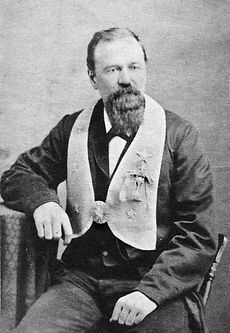
Dr. Lee's graduation portrait from medical school.
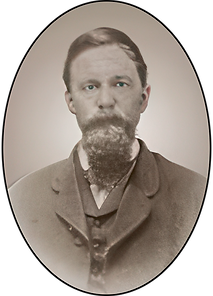
Norman Leslie Lee was born on March 29, 1837, in Illinois, while his parents were making their way west from Ohio to Iowa. Even before he could walk, his family was on the move — part of that restless wave of pioneers seeking new beginnings beyond the Mississippi. When Norman was ten, the Lees set out once more, this time for Oregon. They reached Portland when it was little more than a riverside settlement of fewer than a hundred souls. From there they moved to the Tualatin Plains, and by 1850 had found their home in Linn County, where Norman spent his youth.
He attended local schools and, like many young men of his time, took on the hard work of building a life in a new land. In 1868, he married Amanda Melvina Griggs, a Linn County native.
When the Civil War broke out, Norman enlisted in Company F of the First Regiment, Oregon Infantry. He was later stationed at Fort Lapwai, Idaho, during a time of tension with local tribes. There, amid the rough life of the frontier post, he discovered a new calling. Under the guidance of Dr. George K. Smith, the Army’s post surgeon, Norman began studying medicine and surgery. His service ended with an honorable discharge in 1865, and he went on to work at the Fort Klamath Indian Reservation — earning enough to pursue his newfound passion in earnest.
With those savings, he entered Willamette Medical University in Salem and graduated on March 3, 1871, among the school’s very first doctors. Dr. Lee began his practice in Salem, later moving to Lebanon and Lancaster before finally settling in Junction City. There he built not only a thriving medical practice but also a reputation for calm competence and care.
Junction City, Dr. Lee and Amanda raised four sons and a daughter. Both were deeply involved in community life, working to improve the schools, the town, and the lives of their neighbors. The quiet persistence that had carried them across the frontier also helped shape the young town, leaving behind a legacy of service, hard work, and faith in the promise of Oregon.